Ancestor Work · Foundations of the
Shamanic Encounter
The ancestors are not gone. In almost every shamanic culture they count as their own category of conversation partners · living relatives who dwell in another layer.
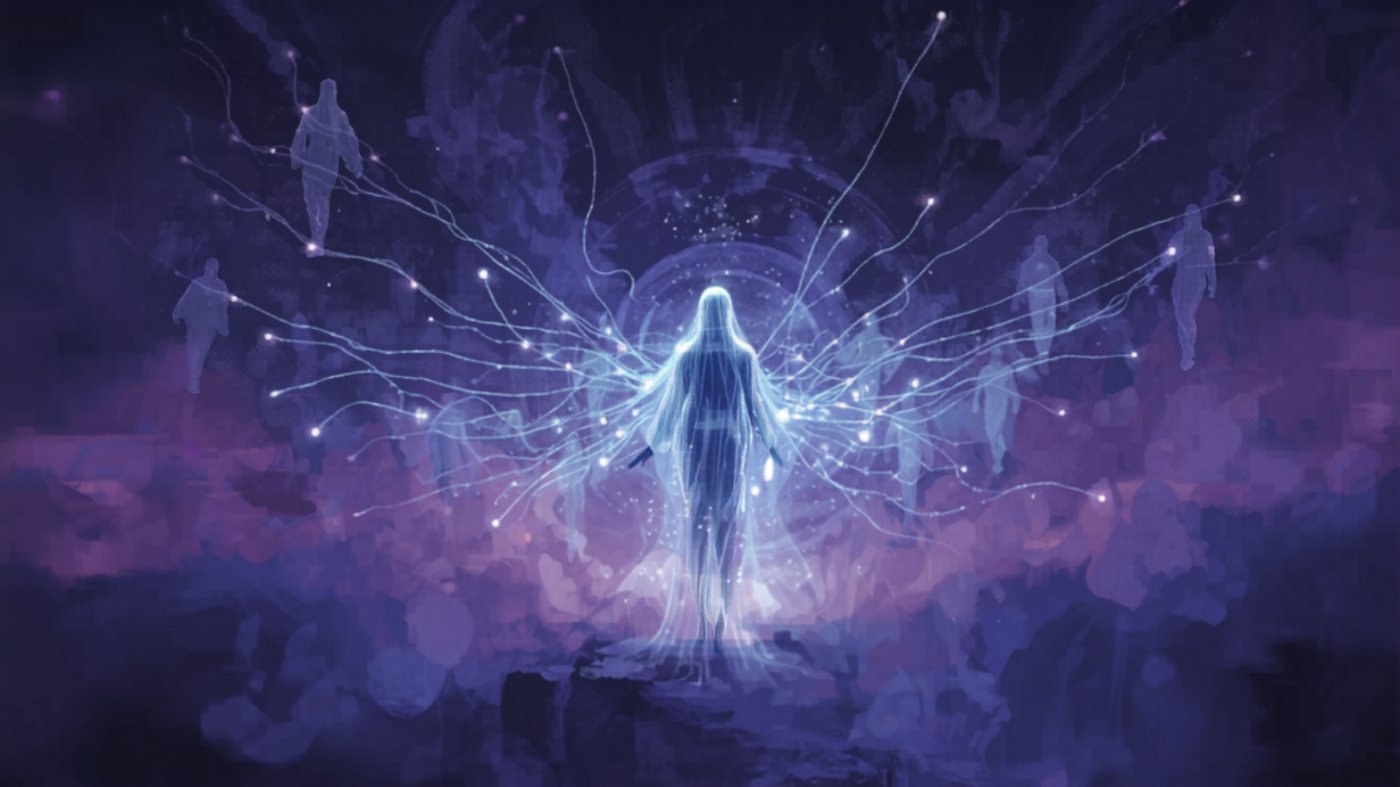
In modern Western societies the dead are often far away. You visit them at the cemetery, remember them, tell stories about them. But they are actually gone. In almost every traditional culture in the world it is different. The dead are not gone — they have crossed into another layer of reality and can be addressed there. The ancestors are their own category of conversation partners. And they remain so for generations.
This article expands a theme from the general shamanism hub "What Shamanism Really Is".
Why ancestor work is rare in Western modernity
Western culture has largely lost ancestor work. The reasons are several: Christian theology, which placed the dead in heaven or hell (where they could no longer be addressed); the Enlightenment, which displaced spirit beings altogether; modern individualism, which dissolved the multi-generational family structure.
And yet in many areas of life the price of that displacement shows up. Family therapy, systemic constellation work, trauma research — all of these keep running into the reality that unresolved themes from earlier generations continue to act in the descendants. The shamans of the world knew this. Western modernity is discovering it again.
Three categories of ancestors
Shamanic traditions distinguish different types of ancestors:
Blood-related ancestors
The direct line — parents, grandparents, great-grandparents, as far back as possible. In many African traditions the line is actively cared for back to the seventh generation. Whoever can go further works with older lines. At some point memory blurs — and there the mythic ancestors begin.
Lineage ancestors
The ancestors of a specific spiritual lineage. Anyone initiated in a tradition also has the masters and teachers of that lineage as ancestors. Mark Hosak has Kūkai as an ancestor in the Shingon lineage. Voodoo practitioners have the great Houngans and Mambos. This is not a metaphor — it is a real spiritual connection, activated by initiation.
Mythic or primordial ancestors
The oldest figures — often half-divine, half-human, at the border between myth and history. In the Egyptian context this is Osiris. In the Germanic tradition the Aesir. In the Japanese the first emperors, who count as divine. These figures stand at the foundational base of a culture and can be addressed as very deep ancestors.
Whoever works with the ancestors no longer stands alone. Behind every human being stand hundreds. Most have fallen out of consciousness · but they are still there.
The difference between healthy and unhealthy ancestors
A point underestimated in much shamanic writing: not every ancestor is ready to advise. Some ancestors are themselves still entangled. They are caught in a suffering they could not resolve in life, and they pull the living into that suffering.
The African tradition is especially clear here. An ancestor counts as benevolent when he has freed himself from his own suffering and risen into a higher layer. Whoever still hangs in it cannot help the living — on the contrary. The first task of ancestor work is therefore often to liberate the ancestor himself, so he may become benevolent.
The basic practice
How to begin ancestor work? A simple structure that has parallels across many shamanic traditions:
An ancestor place
Set up a small place in the home. A shelf, a corner, a small table. Put images of the deceased there — first the ones you knew personally. If you have no images, a slip of paper with the name is enough. A glass of fresh water. A candle.
Regular greeting
Once a week (or more often) a short encounter. Stand before the place. Light the candle. Call the names inwardly. Speak a few sentences — about your own life, about questions, about gratitude. This is not a theatrical conversation with the dead. It is a simple practice of presence.
Listening
After speaking: a few minutes of silence. Not actively straining to hear, but staying open. Sometimes an answer comes — as a feeling, an inner sentence, an image. Sometimes nothing comes. Both are fine. The ancestors do not speak on command.
Concrete gestures
In African and Asian traditions, giving something to the ancestors belongs to the practice. Water, food, incense. This sounds abstract to Western ears but is culturally deeply grounded. An ancestor given something feels acknowledged — and acknowledged ancestors help. The Japanese Obon, the Mexican Día de los Muertos, the Chinese Ghost Festival all show this logic publicly each year.
Difficult ancestors
What if the family history is heavy? What if your own ancestors did things you do not want to be identified with? In the German-speaking world this is especially the question of the Nazi past or other troubled chapters.
The shamanic answer: precisely these ancestors need work. Not whitewashing — a clear naming of what was. But also not exclusion. Whoever rejects an ancestor carries that ancestor's load further. Whoever addresses him, names his deeds, and wishes him a path toward his own clearing — sets something in motion that mere silence cannot move.
This is hard work and should not be done alone. The live events at Shamanic Worlds make room for this kind of ancestor work, with appropriate guidance.
Ancestors across traditions
The form of ancestor work varies by culture:
- Africa and voodoo · ancestors as active advisory beings · altar with images, regular offerings · especially dense in Haitian voodoo
- China and Daoism · ancestor tablets with the names of the deceased · regular ceremonies tied to specific festivals · connection to the grave
- Japan and Shintō · Kamidana (kami shrine) in the house · Butsudan (Buddhist house altar) for the deceased
- European folk cultures · partially preserved in the All Saints / All Souls complex · sharply flattened in the last 100 years
- Indigenous American cultures · ancestors as part of the order of creation · dances, songs, ceremonies
Ancestor work at Shamanic Worlds
In the practice at Shamanic Worlds, ancestor work is one of the central structural elements. It flows through all five tradition strands: wolf shamanism with the pack ancestors, the voodoo strand with the Loa and personal ancestors, the Japanese strand with the Buddhist lineages and the Shintō kami, the Egyptian with the figures of the underworld, the Daoist with the Wu ancestors. Each lineage has its own way of shaping ancestor work.
The underlying structure, though, is universal: ancestors are living conversation partners who want to be tended. Whoever takes them seriously stands on a ground that many modern people no longer know.
Invite the ancestors in
Ancestor work happens within the Wolf Shaman Master Path — in different forms depending on the tradition strand.